Access control readers
How to choose a reader to your access control system?
Download our free guideInterfaces, technologies, installation environment and more. These are factors you must consider to choose the right reader for your access control system. All covered in our guide. Download for free!
What are the most used access control methods?
Tags and cards
Access control tags are available in various forms and sizes, including compact keyrings and badges designed for lanyards. Access control cards typically resemble credit cards and are made from printable plastic. Personal identification data is stored within these tags and cards. Advanced technologies, such as MIFARE DESFire, secure this information by using security keys protected with high-level TDES and 128-bit AES encryption. Unlike older technologies that rely solely on reading the card’s UID and are less secure, modern cards and tags cannot be duplicated, ensuring a higher level of safety.
Smartphone
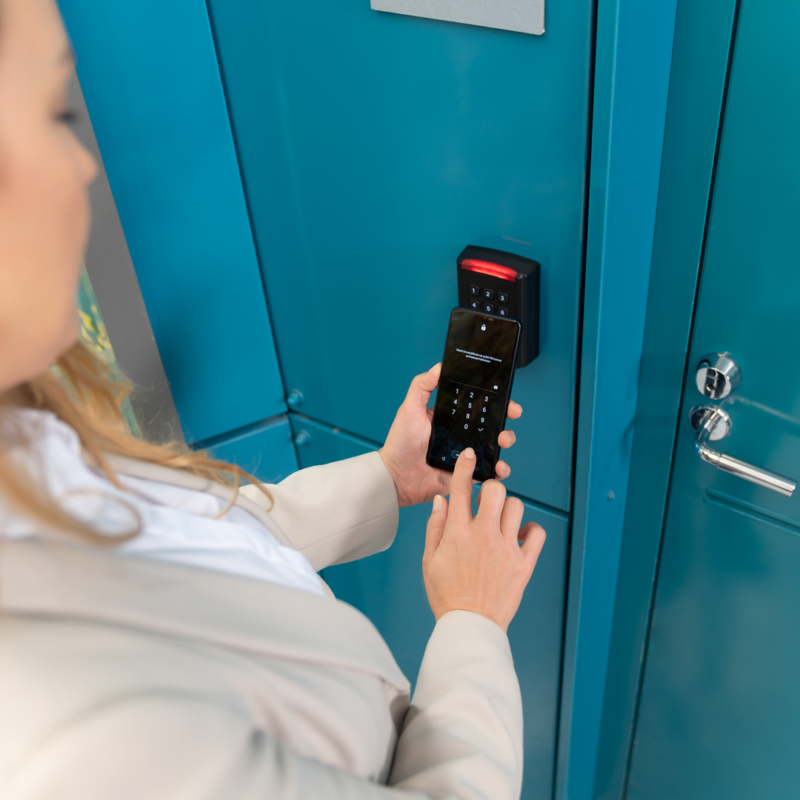
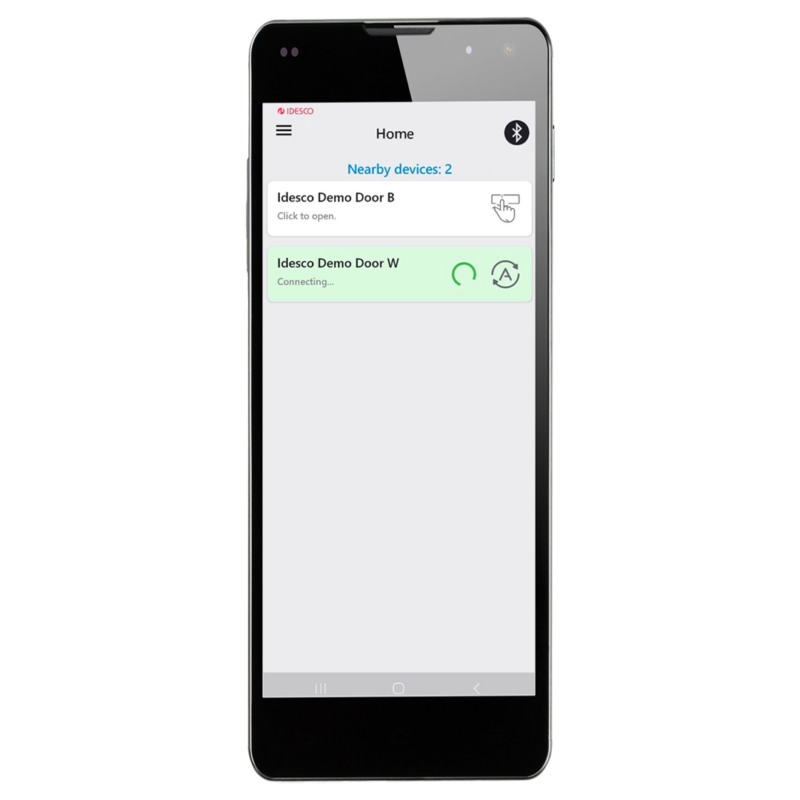
Mobile phone access is increasingly replacing physical access cards and tags. Access credentials can be securely stored in smartphones, and access control readers read them using Bluetooth Low Energy (BLE) and Near Field Communication (NFC) technologies. Mobile credentials are cost-effective and environment friendly when eliminating the need for physical tags. They are also easy to manage and can be issued remotely to users’ phones. They also enable multi-factor authentication, if unlocking the phone is required for identification.
Security with pin code
Personal pin codes are used in access control to provide security. When combined with access cards, they enable two-factor authentication (2FA) that complies with the NIS2 directive. Pin codes can be customised for different security needs, such as requiring an additional code during certain hours. Features including sound feedback, tactile pads, backlighting, and adjustable angles are available to support user convenience and accessibility of pin code readers.
How to protect security sensitive access control sites?
-
Military facilities require the highest level of security to protect classified information, critical assets, and personnel. Their systems must be tamper-proof and resistant to both physical and digital attacks. Other requirements for readers in military facilities:
- Support for multi-factor authentication (card + pin code)
- Rugged hardware: Readers and controllers must be durable and able to function reliably in harsh environmental conditions.
- Hierarchical access control: The system itself must support a complex hierarchy of permissions, where access is strictly based on a person’s security clearance and need-to-know status.
- Offline capability: In many cases, the system is also working offline, and should have the ability to make local access decisions and log events even if network connectivity is lost or it is not wanted.
-
Government buildings and public services handle sensitive data and serve the public, requiring a balance between high security and efficient public access.
- Visitor management: The system must include a robust process for managing visitors, issuing temporary credentials, and tracking their movements within the facility. Mobile phone access with remotely issued temporary access rights directly to users’ phones is a convenient and cost-effective solution for temporary access rights.
- Open standards: To avoid vendor lock-in and ensure long-term flexibility, authorities often require systems based on open technologies like MIFARE DESFire. This allows them to maintain control over their security keys and choose from multiple suppliers.
- Scalability: The system must be able to scale easily from small offices to large, multi-building campuses, while maintaining a single, centralized management platform.
- Compliance and reporting: Detailed reporting and auditing capabilities are necessary to meet regulatory requirements and demonstrate security compliance.
-
As part of a nation’s critical infrastructure, power plants and other energy facilities face a dual threat from physical and cyber-attacks. Secure access control is essential to prevent sabotage and ensure the safety of employees and the public. The access control system must seamlessly integrate with video surveillance, intrusion detection, and building management systems to provide a unified security view.
- Granular Access Zones: Access must be controlled at a very specific level, from the main gate to individual rooms housing sensitive equipment.
- Real-Time Auditing: The ability to track who has accessed a specific area and when, with a full audit trail, is essential for compliance and post-incident analysis.
- Environmental Resilience: Hardware must be capable of withstanding the extreme temperatures, dust, and electrical interference common in industrial environments.
-
Hospitals have specific access control requirements that must address both security concerns and the continuous movement of people, while supporting patient care. Unlike office buildings or power plants, hospitals present a dynamic environment that requires a balance between maintaining security and ensuring accessibility. Some special requirements for hospital access control are:
- Protection and control of specific areas such as hospital pharmacies.
- Stock control of hospital pharmacies with RFID identification.
- Hands-free access to support movement (nurses moving with patients in hospital beds) etc.
- Hands-free access to support hygienic access control without touching access control devices (mobile access, hands-free readers).
- Durable, moisture-proof access control readers with IP67 protection class that are easy to clean.
Principles of secure access control
MIFARE DESFire
MIFARE DESFire is one of the most secure card technologies. It uses 128-bit encrypted mutual authentication protocols (AES / TDES) between readers and cards or tags. Both readers and cards are programmed with shared security keys. DESFire is based on MIFARE’s open, multi-source standard, which promotes device availability and ongoing technological development.
OSDP
OSDP is a standardised, secure, bi-directional data protocol. While securing data transfer between readers and host, it also enables downstream data file transfers from system hosts, simplifying and speeding onsite device configurations and even firmware updates. Idesco’s OSDPv2 compliant products are verified by SIA (Security Industry Association).
Secure reader supplier
Security risks now go beyond hacked access cards, requiring careful sourcing of critical devices and selection of trusted partners for sensitive data management. Our ISO/IEC 27001 certification confirms compliance with top information security standards.
New access control reader Cardea
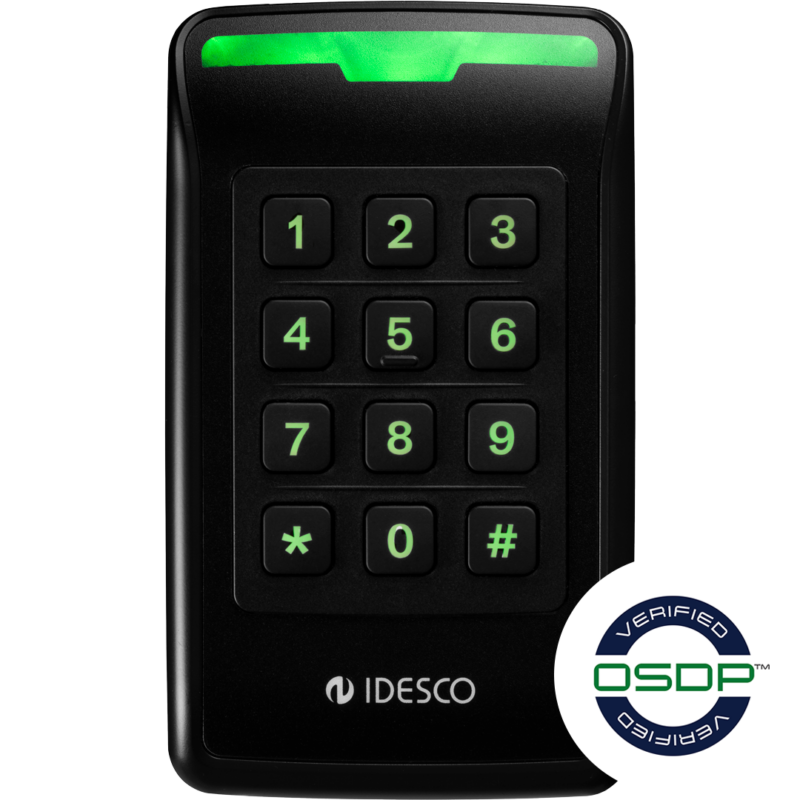
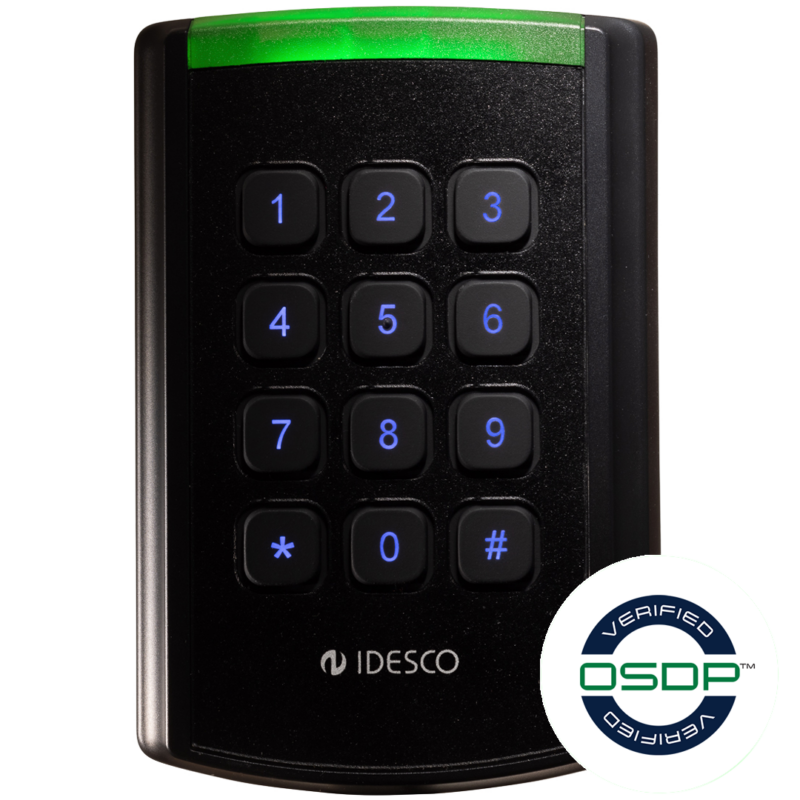
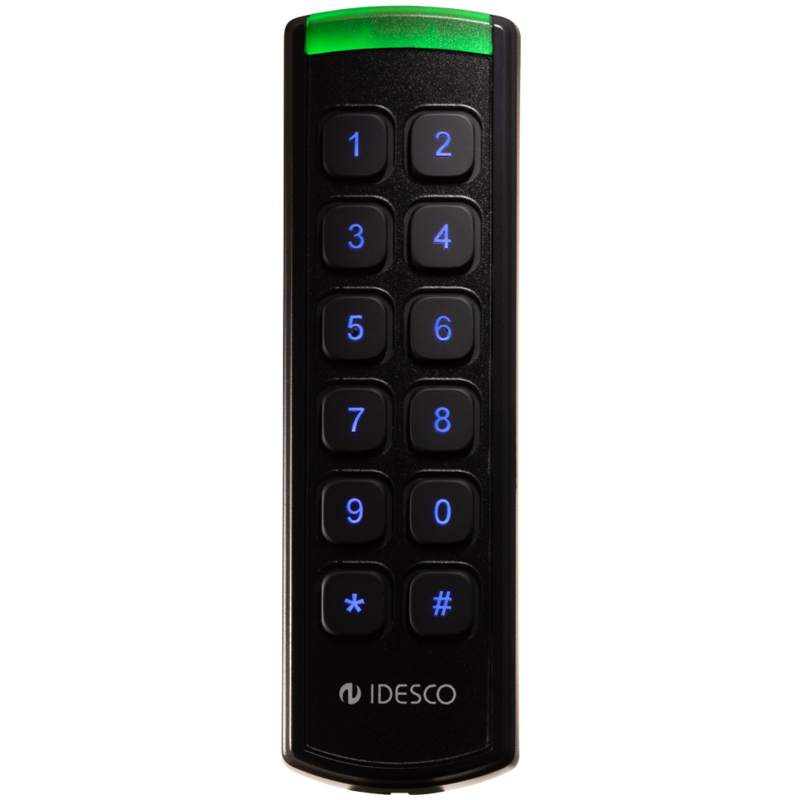
Cardea simplifies access control reader choices, saving time and resources for access control system providers. It provides a huge number of features, making it a safe, future-proofed and highly secure reader for any modern access control system, also for harsh outdoor settings. Four different reader models to suit any indoor or outdoor installation.

Access control use cases
What are the latest trends in access control?
Cyber security
Site security now goes beyond physical boundaries and access credentials. It’s essential to understand how cybersecurity risks affect product design and service development. Secure management of digital keys, secure supply chain and knowing who has any access to your devices during their production or delivery, or to sensitive data, is vital for risk assessment.
NIS2
NIS2 (Network and Information Security Directive 2) is the European Union’s latest update to its cyber security directive. Its mission is to strengthen cyber security for critical infrastructure across the European Union. One of NIS2 requirements is two factor authentication. That’s easily fulfilled by requiring user pin codes as well as cards or tags.
Mobile access
Mobile phones offer secure, convenient access by storing user credentials, eliminating the need for separate cards or tags. Security matches that of contactless payments. Administrators can remotely issue access rights, which is ideal for temporary needs. Reducing physical cards saves time and lowers environmental impact.
Differences between secure access control technologies
There are two types of secure technologies: proprietary and open. Proprietary technologies are supplier-specific, so compatible tags and readers can only be purchased from one source. Open technologies follow shared standards, allowing you to choose between different suppliers for compatible devices. While both options offer similar security, proprietary systems limit your ability to find alternatives later.
All secure access control systems—proprietary or open—rely on shared security keys between readers and cards. Open technologies offer supplier flexibility, but if your vendor controls the security keys, you may still be limited. If you can’t program your site’s keys into new readers, they won’t work with your system. Before choosing your supplier of open technology devices, and confirm who controls the security keys before choosing a vendor.
Learn more about Idesco Security Key Management
In what kind of access control solutions are Idesco products used?
For easy mobile access
Need mobile compatible access control readers, a customisable mobile access app, or flexible mobile credential management options? Idesco ID will give you and your personnel an easy path to entering doors using personal phones. Discover how easy Idesco ID will make mobile access for you and your users!
For tough environments
The most challenging environments test readers to the limit. That’s why Idesco’s readers, already known for toughness and durability, are found in prisons and public places alike. Reliable tamper alarms, impact-enduring housings, keypads impervious to snow or ice – are just examples of how Idesco’s reader design will reduce your access system maintenance costs.
For everyone, everywhere
We design our readers for maximum user-friendliness. Tactile keypads, visible numbers, five dot, pin pad backlighting, adjustable buzzers and different siting angles keep our readers accessible for both visually- and mobility-impaired persons.
For your high security
With a proven capability for robust data encryption from card to host, Idesco readers are frequently chosen by European site security managers to protect the most security-sensitive settings such as banks, airports and military installations.
For time & attendance
If you need to collect time & attendance data for payroll administration, or to fulfil employer obligations to collect worktime and employee entrance data – Idesco readers have you and your work site covered!
For payment & interactivity
Need an efficient user interactivity solution? Transaction convenience? Idesco RFID display and touch screen devices can meet your need. With a broad range of user choice options, from expanded function keypads to robust touch screens, Idesco has you covered.
What do customers say about Idesco access control solutions?
Asio
Finland’s Prison and Probation Service
Loginets